
PET HEALTH · IMMUNITY
The immune gap: the window nobody warns pet parents about
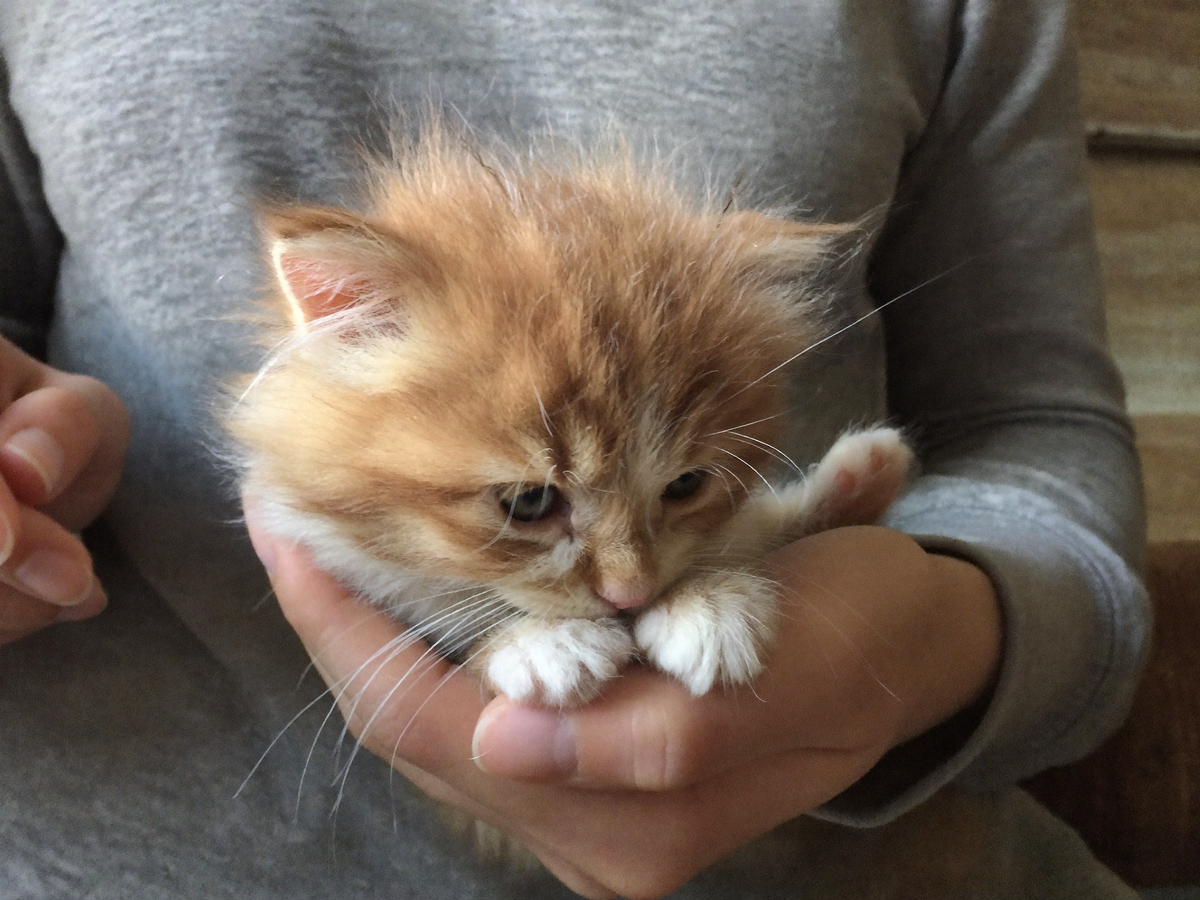
Your puppy sneezed again. Not the cute sneeze. The one where you freeze and think: what if I missed something? They sneezed. Their eyes look a bit watery. They did not finish dinner. Is this nothing, or is this the start of something?
Your vet is not trying to hide this. They are three weeks behind on appointments and you have a two-minute window between 'so how's the recovery?' and the next patient. The gap isn't a secret. It's a scheduling problem. But you still end up at 2 AM wondering if that sneeze means something.
Most new pet parents get told about vaccines, deworming and food. Far fewer get told about the gap.
Your pet borrows its immune system from its mother. That borrow expires. The pet's own system isn't ready yet. The gap between those two things is when the sneezing, the watery eyes, the skipped meals start.
For a few weeks, a young animal is running on borrowed defenses that are already fading — and its own are not finished yet.
What the gap actually is
A newborn kitten or puppy does not build its own immune defenses on day one. It borrows them. In those first hours of nursing, the mother passes across a dose of antibodies — immunoglobulins, the best known of which is IgG — in a thick, golden first milk called colostrum.
Those borrowed antibodies do a real job. They also have an expiry date. Over the following weeks they fade out of the bloodstream, while the animal's own immune system is still learning to make its own. The fade and the ramp-up do not line up perfectly. In between sits a window where a young animal has less of both than at any other point in its life.
Breeders and vets know this window well. It is one reason vaccination schedules are staged rather than given all at once, and it is why the weeks after a pet leaves its mother are the weeks most owners describe as the sniffly ones.

The short version: the antibodies a kitten or puppy borrows from its mother fade before its own immune system is fully up to speed. That in-between stretch is when most owners notice the first runny nose.

Dr. Caldwell, a veterinarian our team spoke with for this piece, put it plainly: 'I see this window every single day. The owner brings in a four-month-old with a mild upper respiratory issue and says, I don't understand, we did all the vaccines. And I say, yes. That is exactly why. The vaccines are coming. The gap is now.' He prescribes rest, fluids, and if the owner is already feeding a supplement he tells them to keep the routine going. He does not say, stop. That is rare in this industry.
It is not only the young ones
The same principle — that immunity is a moving number rather than a fixed one — applies at the other end of a pet's life too, and in the middle of it whenever the body is under load. Pet parents tend to notice the dip at recognizable moments:
- After surgery. The cone is on. The appetite is gone. You're competing with a small body that's using all its energy to heal — and that's the same energy it needs to fight off what's floating in the room right now.
- After an illness. The fever broke. The vet said 'recovery.' But the first two weeks after a flare-up are when the immune system is running on fumes.
- In the frail and the underweight. Rescues, fussy eaters and small breeds that never quite fill out.
- In seniors. Older animals simply do not bounce the way they did at two.
Support for the moments that matter
Amicare Immune Defense is a once-a-day capsule for cats and dogs, built on the same two ingredients this article is about: 99% purity active lactoferrin and bovine colostrum IgG.
Claim the Buy 2 Get 1 Free offer30-day promise · free US shipping over $50
The protein almost nobody has heard of
Colostrum's fame belongs to IgG. But the same first milk carries a second protein that has quietly become one of the most studied compounds in nutrition science: lactoferrin.
It is an iron-binding protein found in milk, tears and saliva across mammals, and it is present in the highest concentrations exactly where you would expect a mother to put her defenses — the first feed.
What makes it interesting commercially is how hard it is to get. Lactoferrin is present in raw milk at vanishingly small concentrations. The working figure the industry uses is roughly 14,000 grams of raw milk to yield one gram of lactoferrin. It is not an ingredient anyone bulks a product out with. It is an ingredient a formulator either commits to or leaves out.
Why purity is the whole argument
Here is the part that separates one bottle from another on the same shelf. Lactoferrin is sold by grade, and the grade tells you what fraction of the powder is actually intact lactoferrin rather than other milk solids carried along with it.
Flip the bottle in your hand right now. If the label doesn't say '99% purity lactoferrin' in plain text, you are holding 70% grade. That means 30% of what you are paying for is… other milk solids. You are not buying a dose. You are buying a name..
This is not an exotic distinction. It is the same reason a fish oil label lists EPA and DHA rather than just fish oil. The name of the ingredient is not the dose.
What to look for on any pet supplement label: a guaranteed analysis with actual amounts per kilogram, the purity grade of the headline ingredient, and third-party testing. If a label gives you none of the three, you are buying a name, not a dose.
What a sensible routine looks like
Two things are worth saying plainly, because the supplement category is not always honest about either.
First: this is nutrition, not medicine. A supplement supports normal immune function. It does not treat, cure or prevent disease, and nothing on this page should be read as suggesting otherwise. If your pet is unwell, the correct first call is your vet — not a bottle.
Second: it works on a slow clock. Nutritional support is not a rescue product you reach for on a bad night. The pet parents who report the clearest difference are the ones who kept a routine going past week four, through the moments when nothing much seemed to be happening. That is the honest reason a 90-day supply is the option we push hardest — not because bigger baskets are better for us, but because a 30-day bottle abandoned at day 22 was never going to tell you anything.
We are not hiding anything. The 30-day bottle is there if you want to test it. But if you are buying one bottle and planning to wait and see what happens, we would rather you knew that going in.
How Amicare is built
Amicare Immune Defense is a capsule for cats and dogs of every life stage. Alongside the 99% purity active lactoferrin and colostrum IgG, each batch carries a guaranteed analysis for taurine and L-lysine, vitamins A, D3 and B3, and a Bacillus probiotic — because a large share of immune activity is gut-resident, and it makes little sense to support one without the other.
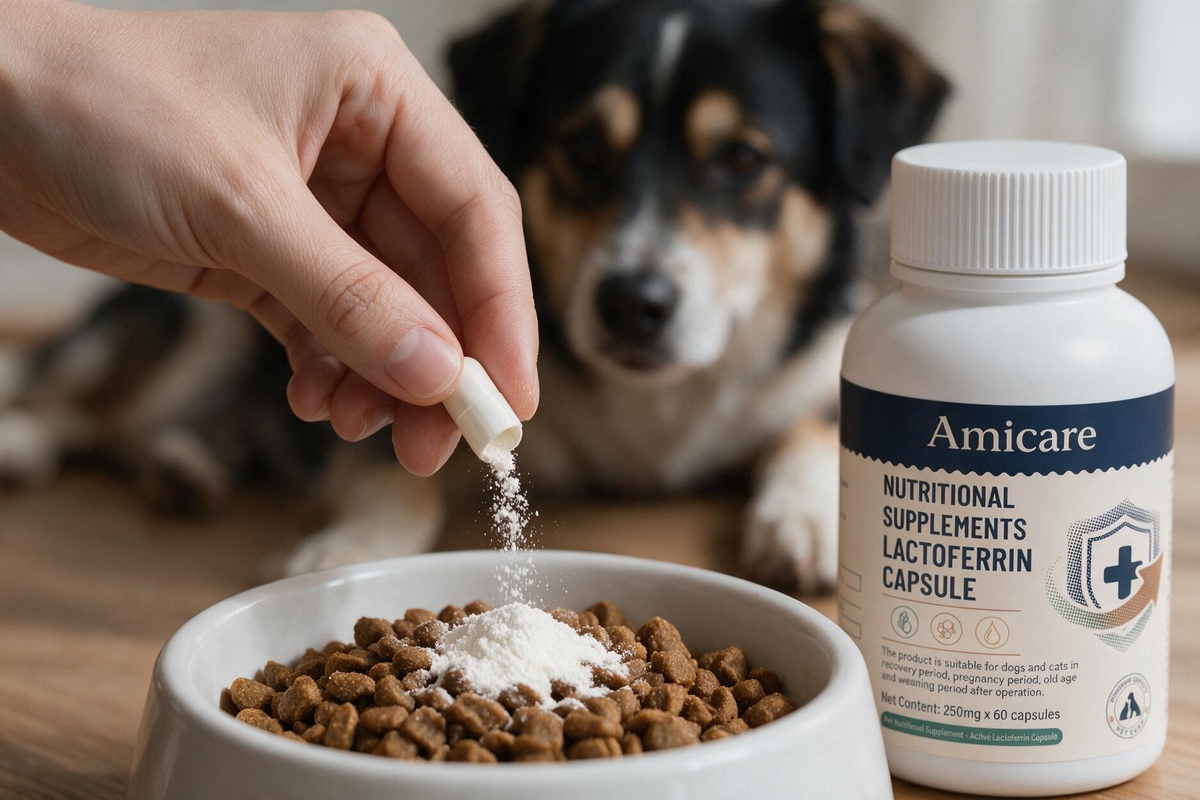
There are no artificial flavor enhancers in it. The chicken liver, fish meal and brewer's yeast base is what makes it acceptable to a fussy cat, and the capsule twists open if hand-feeding is a losing battle at your house.
Why bovine colostrum and not canine?
Because it's the only source of IgG that can be harvested at the purity and consistency a 99% lactoferrin formula needs. Yes, it's cow milk. Your cat won't know the difference. (And if she does, twist the capsule open over a treat. She'll eat that too.)
You're not buying a supplement. You're buying 14,000 grams of milk concentrated into the single gram that actually works. That's what's in every capsule.
Claim the Buy 2 Get 1 Free offer
We run 400 batches a year. This is batch #217. When it's gone, the next one is not guaranteed to hit the same purity. We will not promise a restock date.
Claim the offer30-day happy-pet promise · free shipping over · skip or cancel refills any time
Feed it for 30 days. If you do not notice your pet eating more consistently, playing a little longer, or just… looking a little more themselves, email us. No return form. No 'keep the bottle.' You tell us it didn't work and we send you the money back. We just want the bottle, and honestly, keep it if you want.
This article is sponsored content produced by Amicare. It is general information only and is not veterinary advice. Amicare Immune Defense is a nutritional supplement; it is not intended to diagnose, treat, cure or prevent any disease. Always consult your veterinarian about your pet's health, and never delay veterinary care on the basis of anything you read here.